For more than a century, diamond cut quality has been built on one fundamental idea: the best-cut diamonds return the most light. Today, GIA researchers are expanding that understanding, exploring how human perception—not just physics alone—determine diamond beauty. Areas of research include:
- Studying Diamonds in Motion: Traditional cut grading evaluates a diamond in a face-up position, but diamonds are worn, tilted and rotated, causing their sparkle, brightness and contrast to change. GIA is mapping how a diamond's appearance changes in motion and how those changes affect visual appeal.
- Looking Beyond Brilliance: It isn’t just the brightest diamond that is perceived as the most beautiful. Sparkle, contrast and facet patterns can make one diamond more visually appealing than another.
- Tackling Fancy Shape Cut Grades: Unlike round brilliants, fancy shapes have countless facet arrangements and proportion combinations. GIA is using 3D scanning, ray tracing and advanced modeling to develop new approaches for evaluating their visual performance.
As diamond cut grading continues to evolve, GIA's research is advancing how cut quality is evaluated and communicated across the industry.
Explore the future of diamond cut grading in this article from GIA research Link
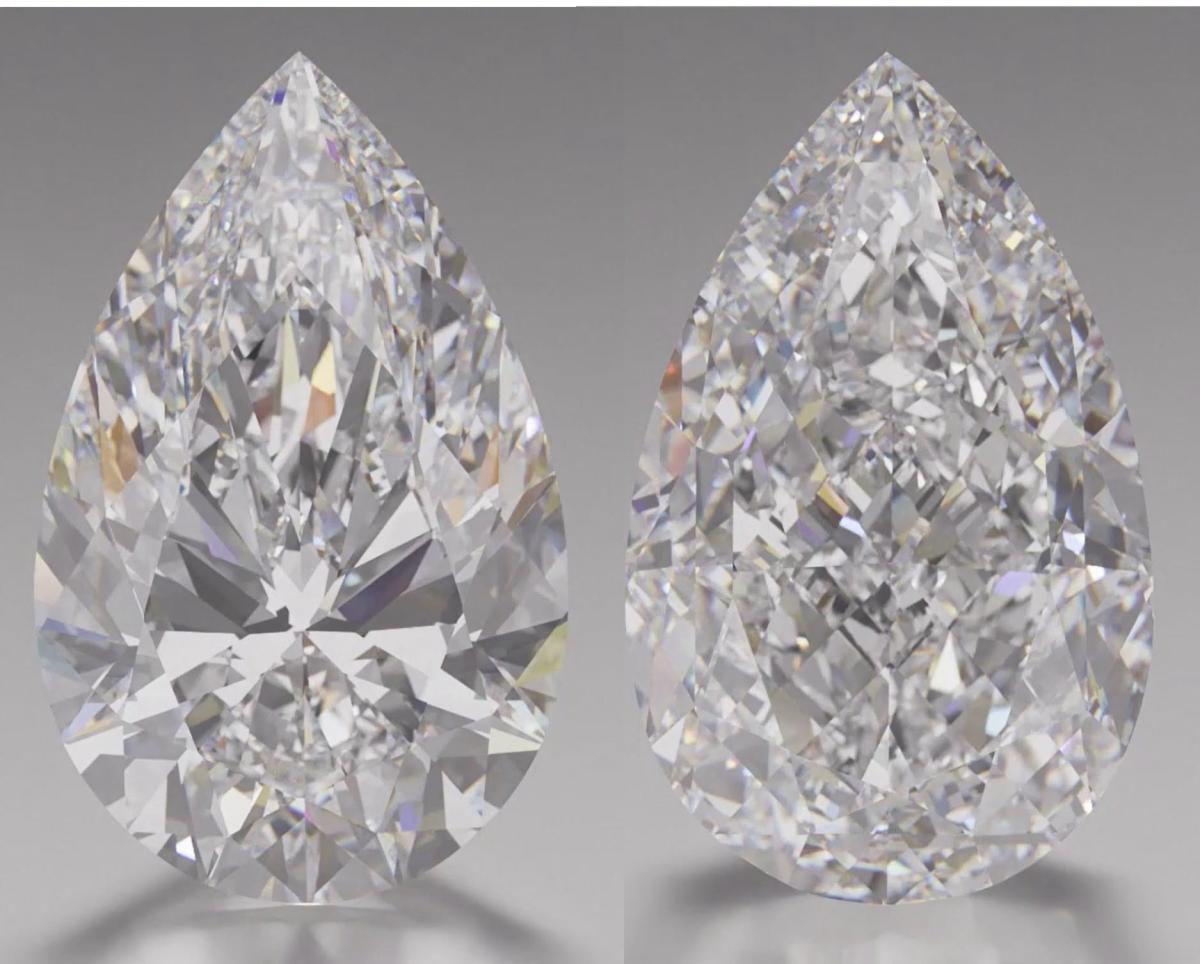
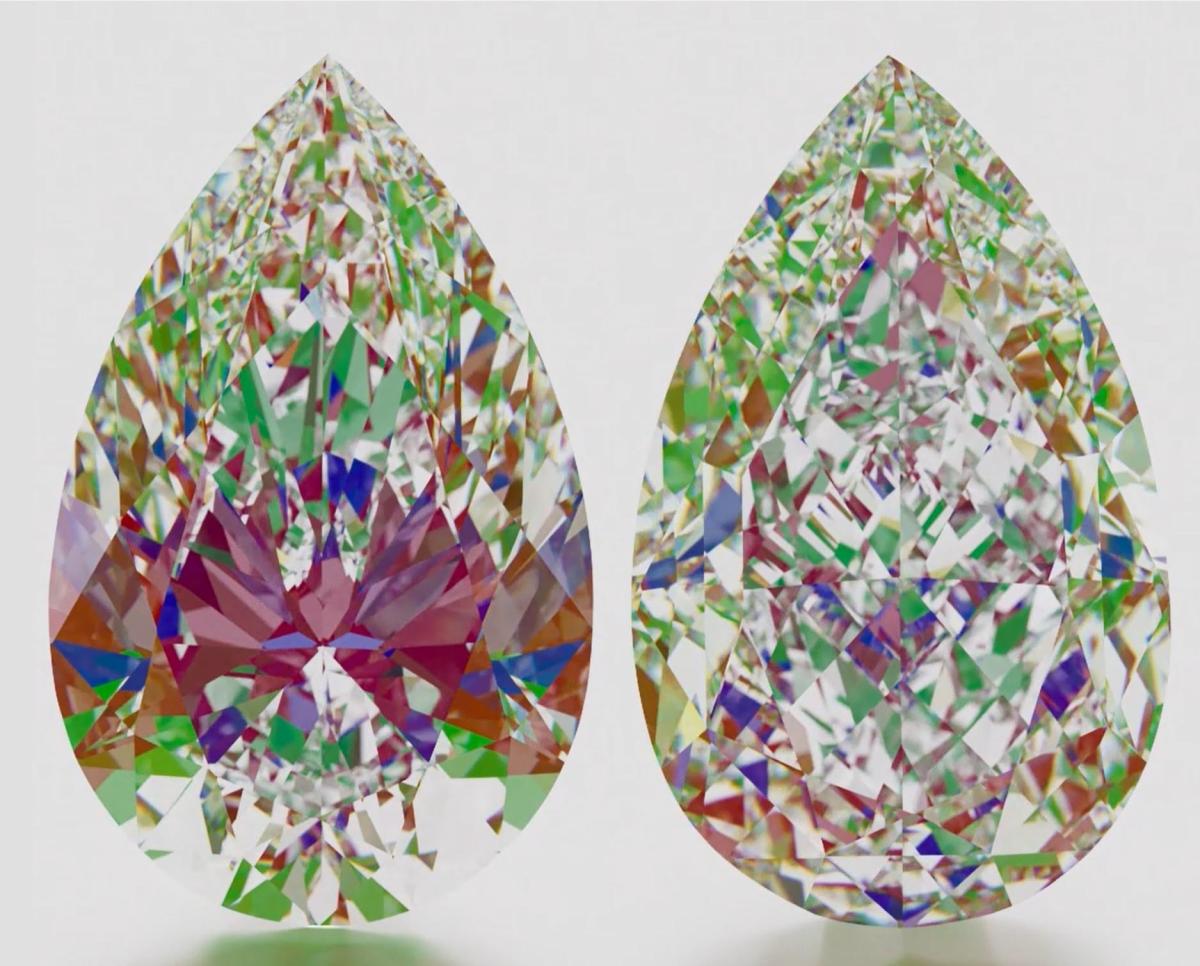
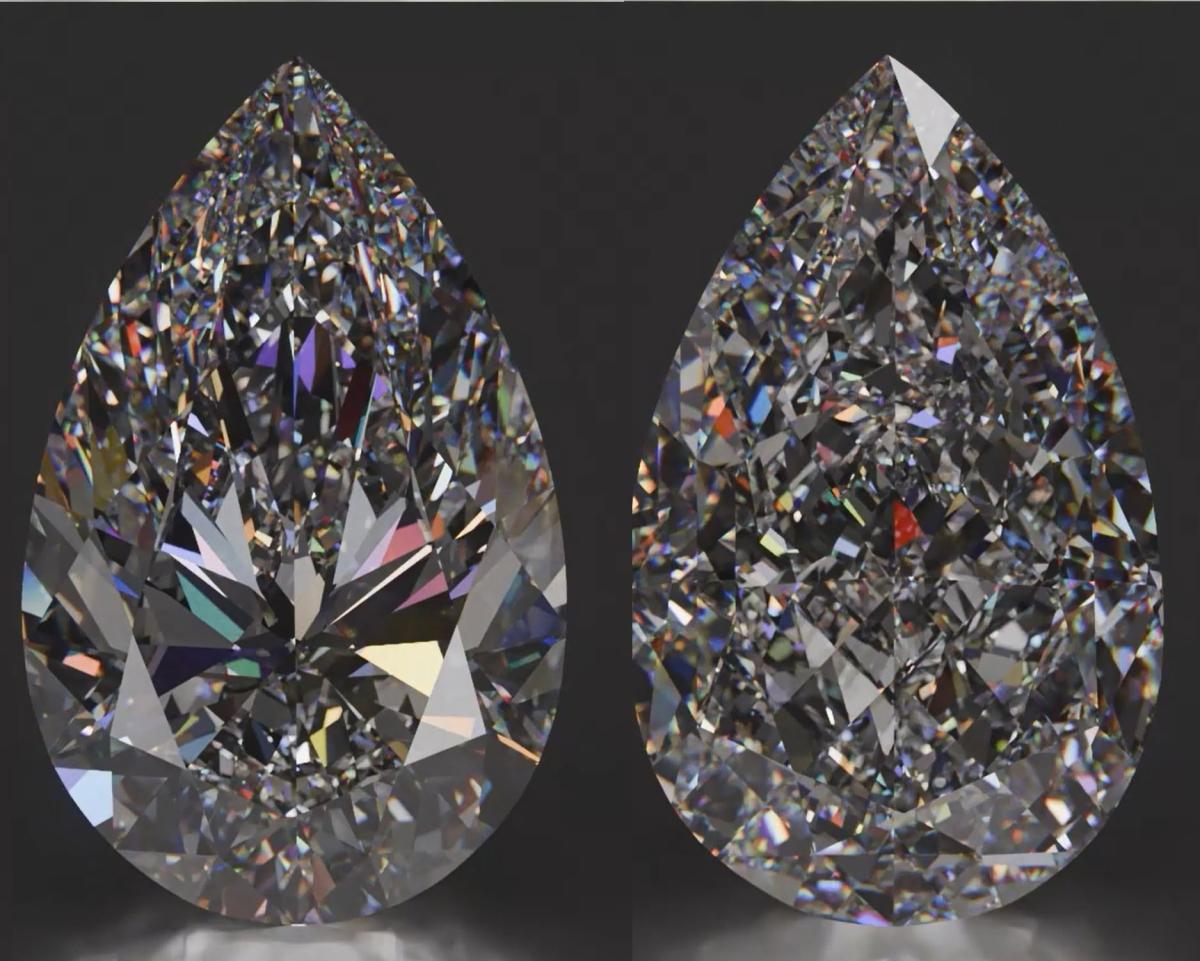
Two Pear Shape Examples
Diamonds can exhibit different visual characteristics due to the various factors already mentioned. One pair is viewed under diffuse lighting, such as in an office. The second pair is viewed in an environment with lots of spot lighting (pinpoints of LEDs above). The third pair shows the related ASET map. Different types of lighting accent differences in appearance.